Exclusive breastfeeding for the first 6 months of life is the recommended approach, and it brings long-term benefits to both baby and mother. Breast milk provides nutrients made for your baby’s age, along with immune factors that help your baby fight off germs from outside. However, breast milk contains little vitamin D, so if your baby is exclusively breastfed for the first 6 months, you need to consider giving your baby vitamin D; ask your baby’s doctor about the right dose.
Written by Dr. Pham Tran Dan Tam (MD, Specialist Level I in Traditional Medicine), a traditional medicine gynecologist at Tam Duc Clinic.
1. What is exclusive breastfeeding?
Exclusive breastfeeding for the first 6 months is recommended around the world. After 6 months, your baby’s body is ready to take foods other than breast milk, which is why babies usually start solid foods at 6 months of age.
Exclusive breastfeeding for the first 6 months provides nutrients suited to your baby’s age, along with growth factors and immune components that help protect your baby from infection.
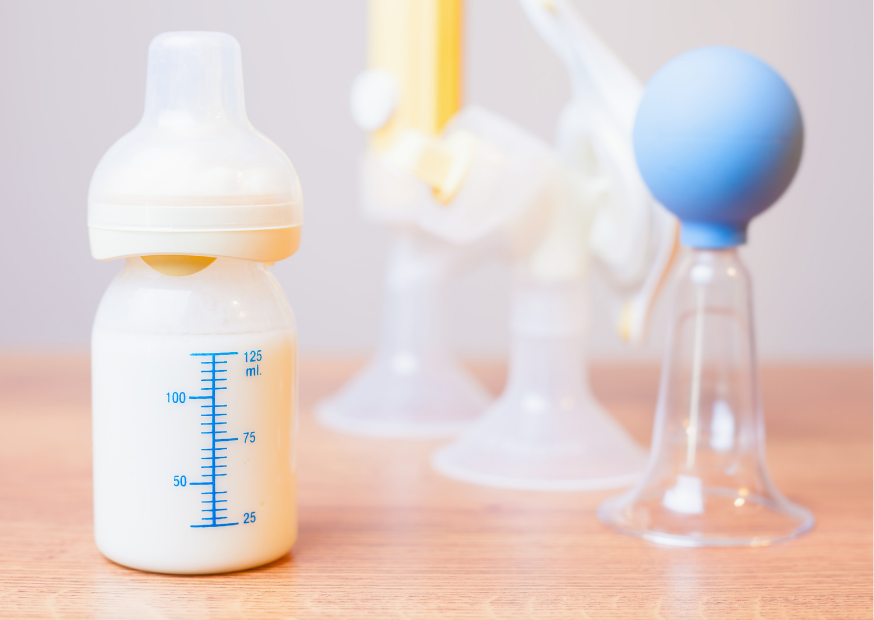
The makeup of breast milk can change to match your baby’s needs
2. Benefits of breast milk
Breast milk provides nutrients made for your baby’s age, along with immune factors that help your baby fight off germs from outside. The protein in breast milk is mainly whey protein, which your baby absorbs easily and which helps the lining of the gut develop and mature. Almost all vitamins are present in breast milk, in varying amounts, but the vitamin D content is low. So if your baby is exclusively breastfed for the first 6 months, you need to consider giving your baby vitamin D; ask your baby’s doctor about the right dose.
Breast milk comes in several kinds:
· Colostrum
Colostrum is produced right after birth and continues for a few days. So breastfeed your baby right after birth, as early as possible.
Colostrum is very different from mature milk in its makeup and content
- Colostrum contains less fat, so it is easier for your baby to digest
- Colostrum is rich in protein, vitamins and minerals, as well as antibodies passed from mother to baby. These strengthen your baby’s resistance and lower the risk of conditions such as diarrhea, respiratory infections and atopic dermatitis…
- Colostrum also has a laxative effect that helps your baby pass meconium (the first stools)
· Transitional and mature milk
Your milk “comes in” around day 2 to day 5 after birth. You will often feel your breasts become full and tight, and your milk can reach 500 – 700 mL/ day at this point
· Foremilk
Foremilk is the milk at the start of each feed. It contains more water and meets your baby’s need for fluids.
· Hindmilk
As your baby keeps feeding, the fat content of the milk gradually rises. Hindmilk is thicker, richer in nutrients and higher in fat than foremilk, so it gives your baby more energy and keeps your baby full longer.
Foremilk and hindmilk are both important. So to give your baby all the nutrients in one feed, follow the breastfeeding steps fully and correctly. In particular, let your baby finish one breast before switching to the other. That way your baby gets all the nutrients that breast holds.
3. What are the benefits of breastfeeding?
The World Health Organization (WHO) recommends exclusive breastfeeding for the first 6 months of life. So what benefits does exclusive breastfeeding in the first six months bring?
3.1 Benefits for your baby
- Breast milk provides nutrition suited to your baby’s age
- Breast milk provides a range of protective factors, such as growth factors and immunoglobulins, which lower a breastfed baby’s risk of conditions such as middle ear infections (otitis media), acute diarrhea, respiratory infections and gastroenteritis, and so lower the chance of hospital admission
- Lower risk of sudden infant death syndrome (SIDS)
- Lower risk of obesity and diabetes
- Lower risk of asthma and atopic dermatitis
3.2. Benefits for the mother
- Breastfeeding lowers a woman’s risk of type 2 diabetes
- Lower risk of breast cancer and ovarian cancer
- Lower risk of endometrial cancer
- Lower risk of high blood pressure
For an in-person consultation, please call our HOTLINE: 0345.22.33.19 (reception speaks Vietnamese) or message our Fanpage https://www.facebook.com/pkdongytamduc
References used in this article:
- Policy statement, Breastfeeding and the use of human milk, American Academy of Pediatrics, Pediatric (2022) 150 (1).
- Breast Feeding, Caring for kids, Canadian paediatric Society, Canada